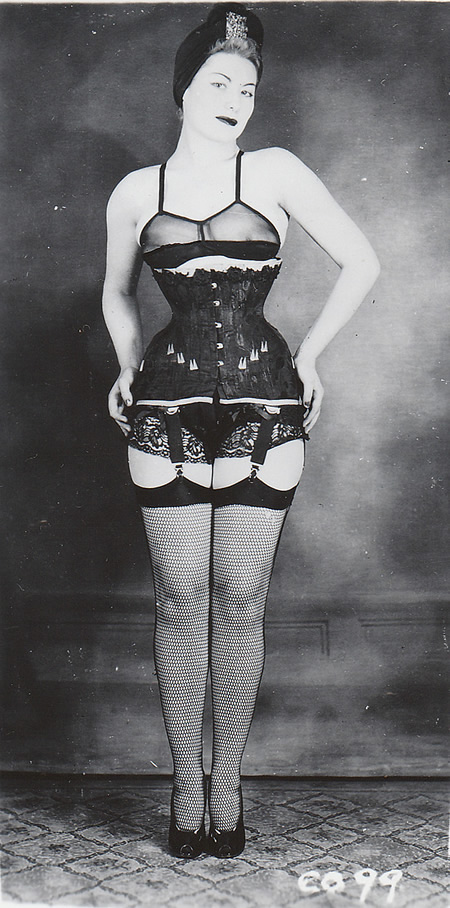
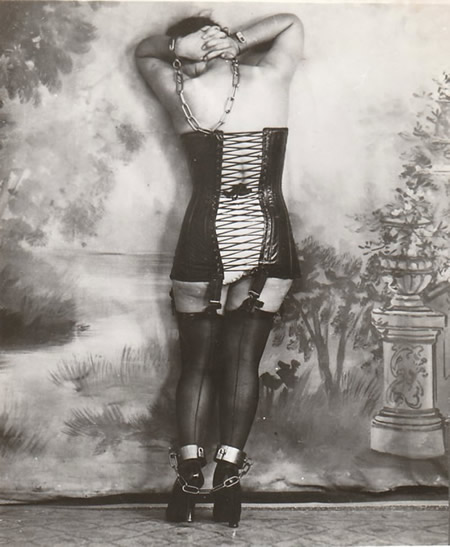
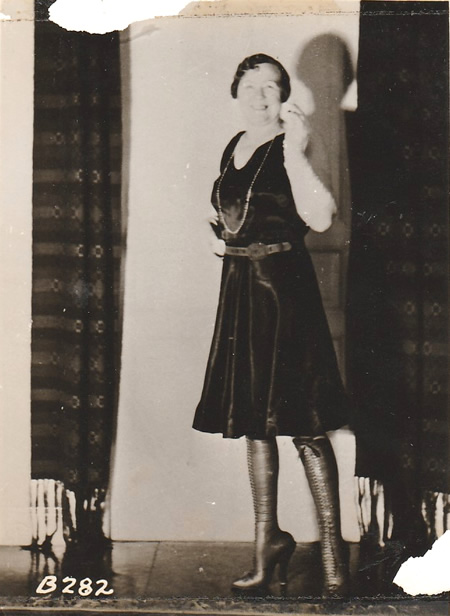
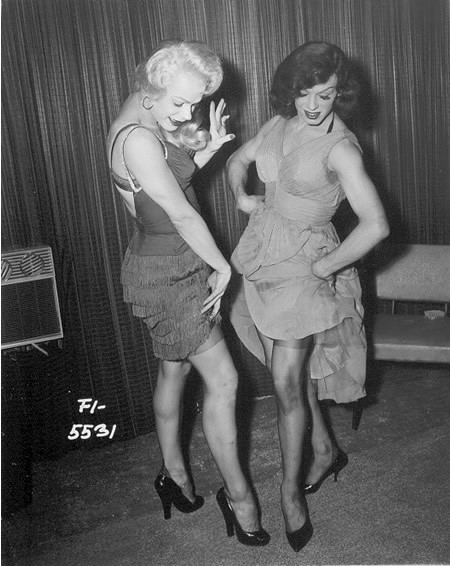
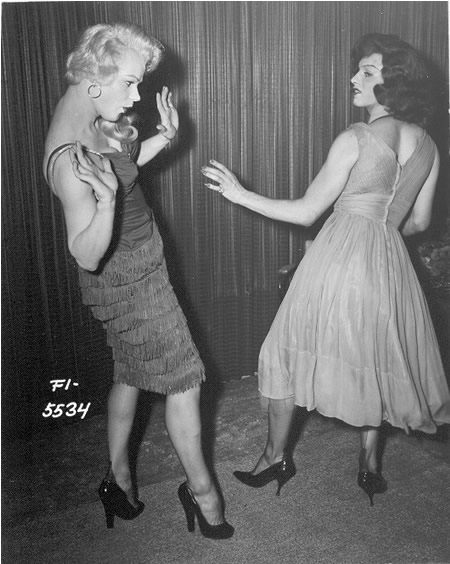
Irving Klaw produced a series of photographs called the Female Impersonators. The photo numbers were preceded with FI. These photographs have a prominent place in the early 1950s catalogs produced by Klaw but I almost never come across them for sale online. Below are 3; their numbers give an idea of just how many individual posed photographs were available in this series.
Burlesque in photos of the 1920s through the 1950s not only includes images of performers, but also photographs where costumes, stage sets, or a sense of performance are present. Burlesque photos don’t have the same sense of intimacy that is commonly found in pinup or nude photos.
Irving Klaw’s photos and movies from the late 1940s through most of the 1950s often have a burlesque quality. Two color Klaw films are available on DVD (Varietease and Teaserama) and the black and white fetish and bondage films often have performers as models. Bettie Page’s photos sometimes have a distinct burlesque quality. Hundreds, if not thousands, of photos were shot by Klaw of minor and major performers doing their acts in sequence.
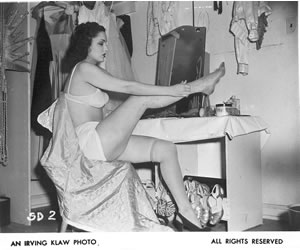
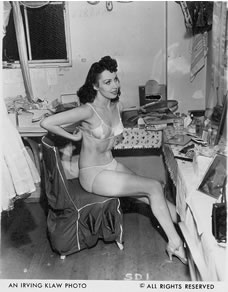
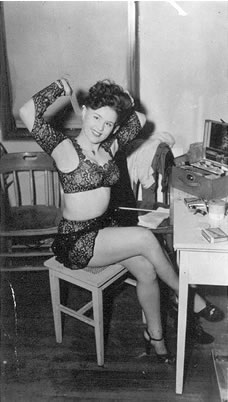
I’m only showing two of Klaw’s photos here – Sara Don in her dressing room. Those after the cut will be from a 1930s/early 1940s vaudeville/burlesque performer’s scrapbook.
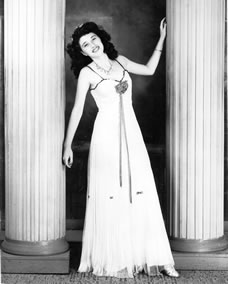
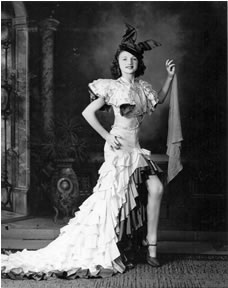
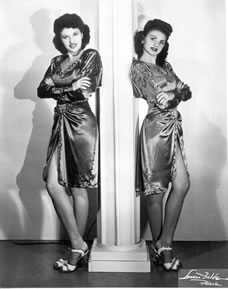
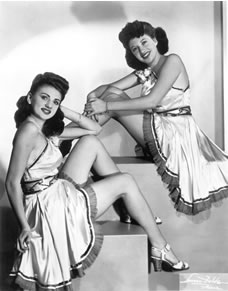
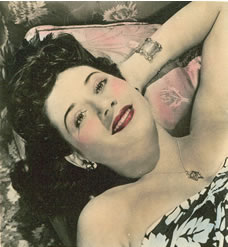
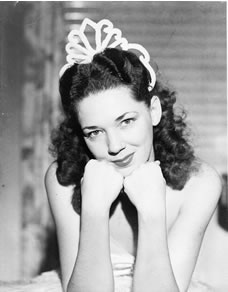
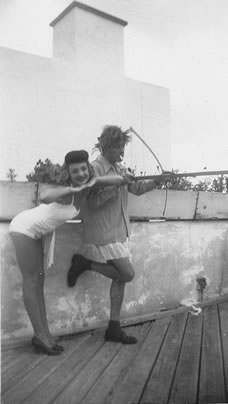
The following photos are from Sue’s scrapbook. Effie Sue and her younger sister Vonda Lou were circus kids. After their father injured his back in 1935 Sue, at about 10, and her sister went on the road doing song and dance comedy routines to support their family. By the late 1930s they were minor performers in the vaudeville and burlesque circuit. The first two photos were taken in Dayton, Ohio about 1940. Sue’s in the first photo, her sister Lou in the second. The rest of the photos date from about 1942 or a little later. The studio photos were taken in Atlanta. Included in the scrapbook were photos from other performers, often inscribed. Three are shown here. The last photo is of Lou and a comedian working on a routine on the roof of a theater in Florida in 1946.
In the 1930s John Willie was living in Australia with his second wife, Holly. He began, heavily influenced by the local fetish culture and London Life magazine, to create art and photographs using fetish themes focused around dress (usually, but not always solely high heeled shoes/boots) or bondage.
I have 300+ Willie photos and of those only 5% are these early 1930s images. The ones I have are 1940s/50s reprints by Irving Klaw. Some 1930s photos were used as illustrations in Willie’s Bizarre magazine published in the US after he moved here in 1946.
Here’s a damaged photo of Holly trying out a pair of boots.
Here are three bondage photos. The first two show the highly formal style that is found in his art and photographs created in this period. The third photo shows an early example of the theme of immobility that was so important in his later work. Holly is the dark-haired model in the first two photos.
There’s no time at the present to really discuss Irving Klaw’s output, so I’ll just present a few photos with minimal commentary. Note that all the photos (unless indicated otherwise) are ones I own or have owned. The past year I’ve sold a number of Klaw prints, including some of these.
Klaw is known best for his Bettie Page bondage photos but his output was much more varied. This is an example from his FI series (Female Impersonator) started around 1950. This photo is from the mid-1950s. The guys in these photos always look like they’re having a great time.
Klaw also sold a large number of pinup photographs, including photographs of burlesque strippers doing their routines. Each Klaw photo had an individual identifying number. Other producers at the same time (such as Burmel) produced sets with all the photos in the same set having the same number.
Klaw had his own photographers producing work, purchased photographs from amateur bondage artists and also bought rights to reproduce pinup photos. The X and Y series of photos (almost 1,000 photos in each series) are made up of these photos, shot by various people in the 1940s. Pinup prints sold for 15 cents each, bondage photos sold for 40 cents each in the early 1950s.
Comparing these photos with the Guyette photos from the earlier post, you’ll notice that Klaw’s photos hardly ever show cropping of the image like as seen in the Guyette photos. The Guyette photos generally are better, though the prints are on cheaper paper and are heavily toned. To me, Guyette photos often show a more modern sensibility.
Heavy cropping of images was also seen in the 1930s French Diana Slip photos of lingerie, where only the torso is shown generally. Brassai worked for Slip.