The Blond Wig

I have come across a few Guyette photographs where a model is wearing a blond wig.

Guyette photo of model wearing wig

I own an early Charles Guyette photograph which I believe was shot in the studio with an unpainted cloth backdrop and a mat used in wrestling photographs covering the distinctive Priscilla pattern Congoleum rug flooring. In this photograph the model is wearing a blond wig. The model’s natural hair is dark and of a different style in another photograph taken in the studio. The photograph I own is is 8.5 by 13.7 cm in size.

Guyette model wearing wig

This is a closer view of the model in the previous Guyette photo wearing the wig cropped from a studio corset photograph reprinted by Irving Klaw which was sold on eBay (an enlargement from the small digital image saved from eBay is partially the reason for the bad quality of the image).

Guyette model wearing wig

This cropped image of head only was scanned from page 84 of Peek: Photographs from the Kinsey Institute (Arena Editions: Santa Fe, NM. 2000). This Charles Guyette model is wearing the wig but is definitely not the same model appearing in the photograph I own. I own another Guyette photograph where a model appears to be a cross dresser or trans and it’s possible the image in Peek is another.
Guyette Studio Flooring

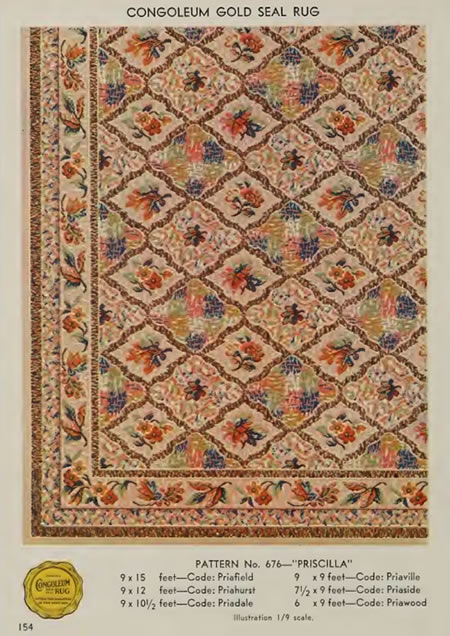
Original Charles Guyette photographs have toned prints while later Irving Klaw reprints tend to be black and white with little or no toning. The toned prints are better at suggesting color but to get a better idea of the world Guyette’s photographs were taken in, the flooring in the studio photographs has a distinctive pattern.

Priscilla congoleum flooring

It’s a Congoleum Priscilla pattern “rug.” Congoleum/lineoleum rugs were so called because they were meant to act as if they were rugs, covering only a portion of a floor. These rugs were popular before the second world war. They were meant to serve the same function in a room as a conventional rug, but easier to clean. This page showing the Priscilla pattern is from a 1936 catalog but the pattern probably dates from the 1920s or earlier. Around 1930 patterns shifted from a grid diagonal to the border to a grid parallel to the border.

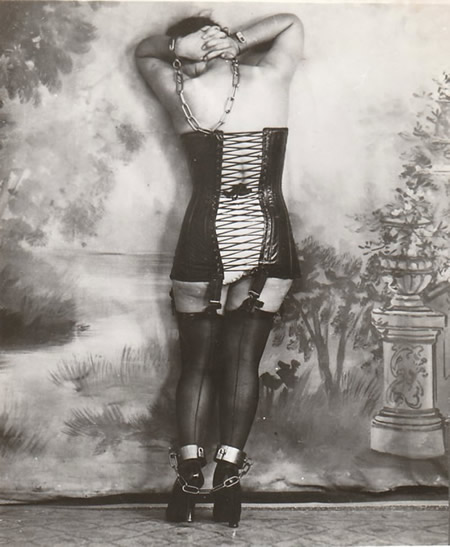
Guyette photograph of a woman taken in the studio

An Irving Klaw reprint of an early Charles Guyette photograph taken in the studio. The photo shows the elements of the painted backdrop with pastoral imagery. Later studio photographs have a painted backdrop with architectural elements. The Klaw print is slightly larger than the 4 x 5 inch size he normally used — 11 x 12.9 cm.